

















By Canteen Connect · Updated
Quick answer
Industrial canteen management in Gujarat’s GIDC estates means feeding large, shift-based workforces on tight timings with strict hygiene, predictable cost and strong supervision. The best results come from a single accountable operator, a planned menu cycle, shift-wise service and regular audits.
Key takeaways
- Shift timing drives everything: service windows, staffing and menu design.
- Peak-hour throughput matters more than kitchen size.
- Hygiene, pest control and food-safety records must be audit-ready every day.
- One accountable operator beats several small vendors.
What makes plant canteens different
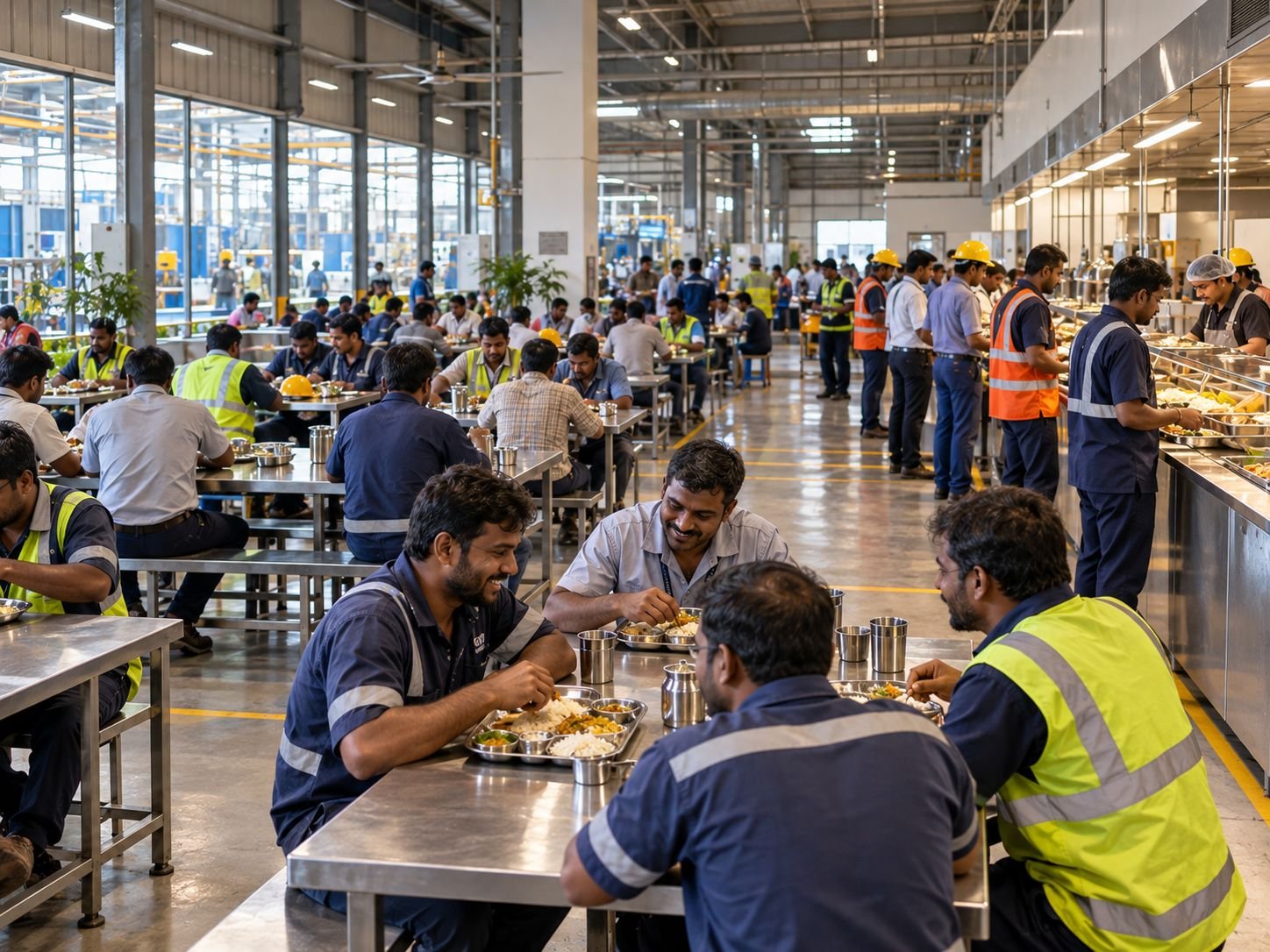
A plant canteen is not a restaurant. Hundreds of people must be served within a short break, often across two or three shifts, in heat, and at a cost the company can sustain. Supervisors cannot afford long queues, and HR cannot afford complaint cycles.
GIDC estates such as Ankleshwar, Dahej, Panoli, Vapi, Kalol and Kadi have another layer: workforces that are large, diverse and often located far from alternatives, so the canteen is the only reliable meal option on site.
The five building blocks
- 1.Shift-wise service plan — counters, queues and serving speed matched to break times.
- 2.Menu cycle — balanced, regional, rotated so food does not feel repetitive.
- 3.Manpower and supervision — trained cooks, servers, cleaners and a site manager.
- 4.Hygiene and safety systems — daily checklists, pest control, water testing, uniforms.
- 5.Cost control and reporting — meals served, wastage, feedback and monthly review.
Menu planning for industrial workforces
Workers on physically demanding shifts need filling, balanced meals — adequate cereals and pulses, vegetables, and something fresh. Heat in summer calls for buttermilk and lighter options; night shifts need a different plan from day shifts. Festival days and fasting days deserve their own menus.
See our guide on planning meals for multi-shift plants for more.
Compliance and audit readiness
Food safety, pest control, drinking water and cleanliness are routinely checked by internal auditors, customer auditors and regulators. A good operator keeps records ready daily, not just before an audit.
This article is general information, not legal advice. Rules change — confirm current requirements with the relevant authority or a qualified consultant.
How to evaluate an operator for your estate
- Have they run sites of your headcount and shift pattern?
- Can they show hygiene and training records?
- Who is the on-site manager and how long have they been in the role?
- What is the escalation route when the plant needs a change at short notice?
Frequently asked questions
Which GIDC estates does Canteen Connect plan to serve?
We are expanding across Gujarat, including Ankleshwar GIDC, Dahej, Panoli, Kosamba, Vapi, Bharuch and Vadodara, in addition to our existing locations around Ahmedabad, Gandhinagar, Kalol and Kadi GIDC.
How is an industrial canteen priced?
Commonly through a fixed per-meal rate, a management-fee model or cost-plus. The right model depends on headcount stability and how much cost visibility you want.
Do pharma plants have special canteen requirements?
Pharma and other regulated plants usually have stricter gowning, entry, hygiene and documentation expectations, which the canteen operator needs to follow.
Ready to talk about your canteen?
Tell us your site, headcount and shifts — we will respond with a clear plan.